Ir diezgan viegli iemīlēties lāzergravēšanas idejā. Tu internetā ieraugi video, kur lāzers dažās sekundēs uz koka...
Latest posts
-
 LaserLearn — LightBurn pamācības, lāzergravēšanas problēmu risināšana un ceļvedis no pirmā gravējuma līdz darbnīcaiLasīt rakstu
-
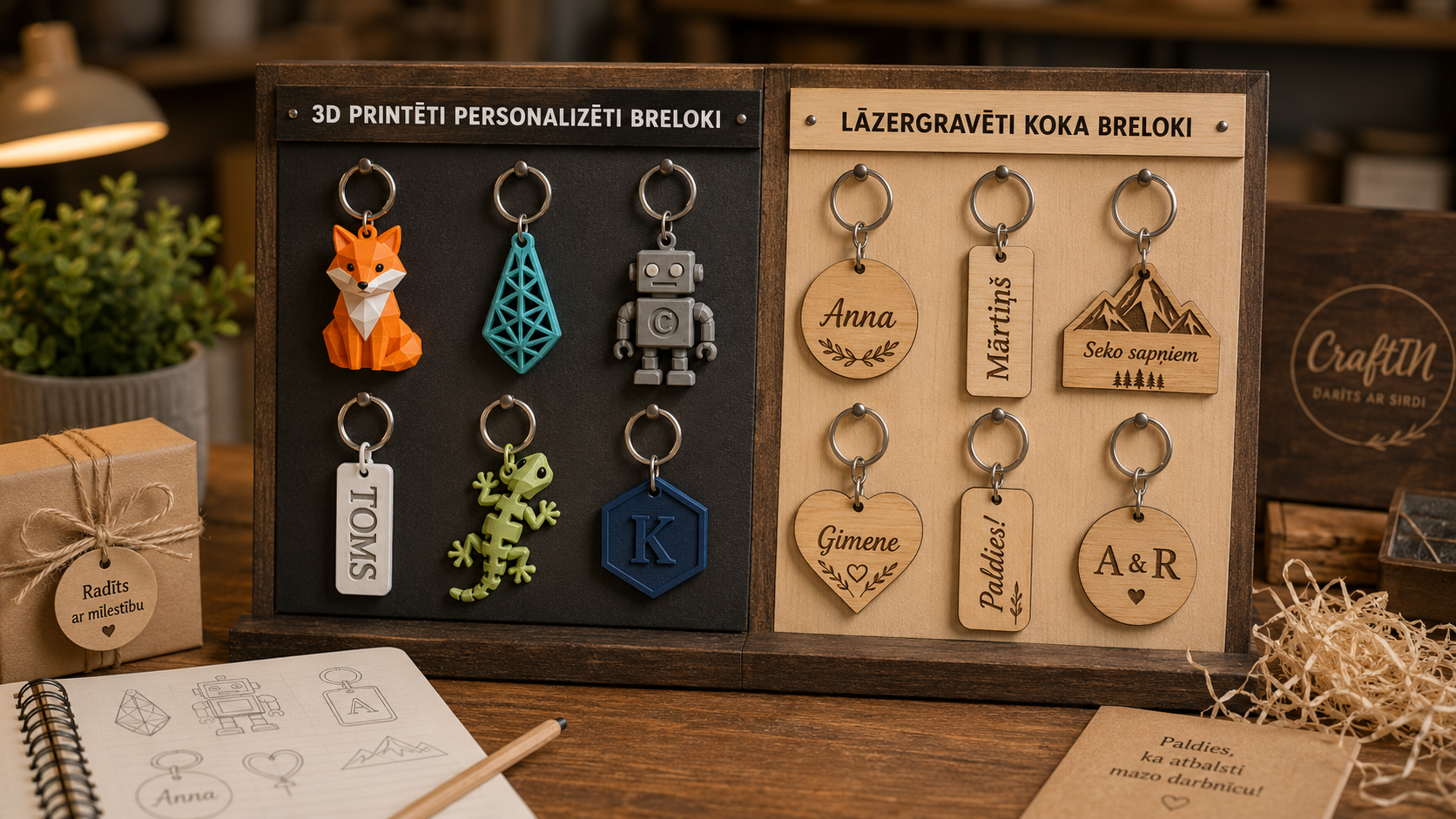 Atslēgu piekariņi ar personalizāciju – maza dāvana ar lielu nozīmiLasīt rakstu
Atslēgu piekariņš ir neliela lieta, kas cilvēkam ikdienā bieži ir līdzi vairāk nekā daudzas lielākas dāvanas. Tas ir...
-
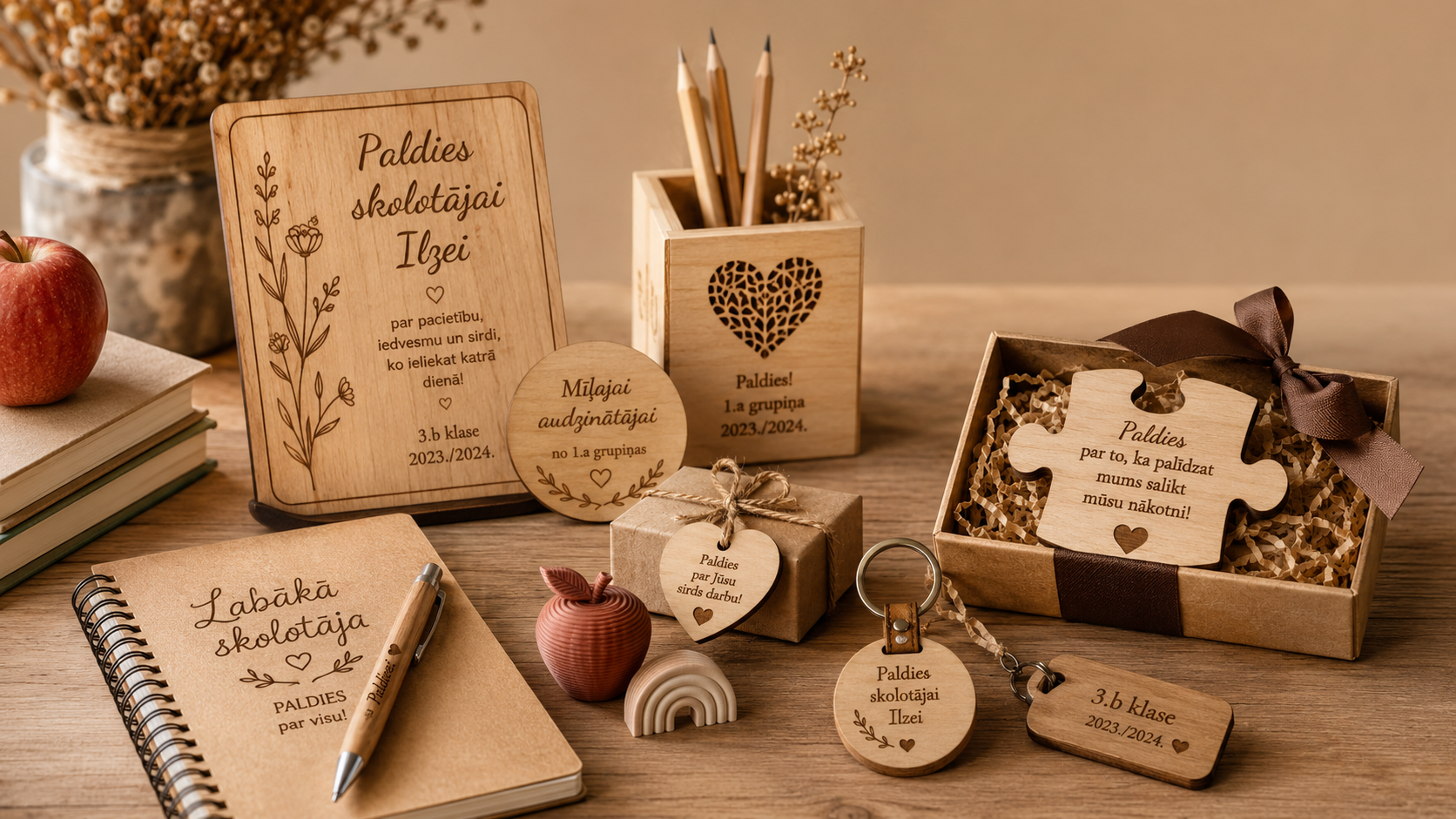 Personalizētas dāvanas skolotājiem un audzinātājāmLasīt rakstu
Dāvana skolotājam vai bērnudārza audzinātājai bieži vien nav tikai formāls “paldies”. Tā ir maza, bet svarīga...
-
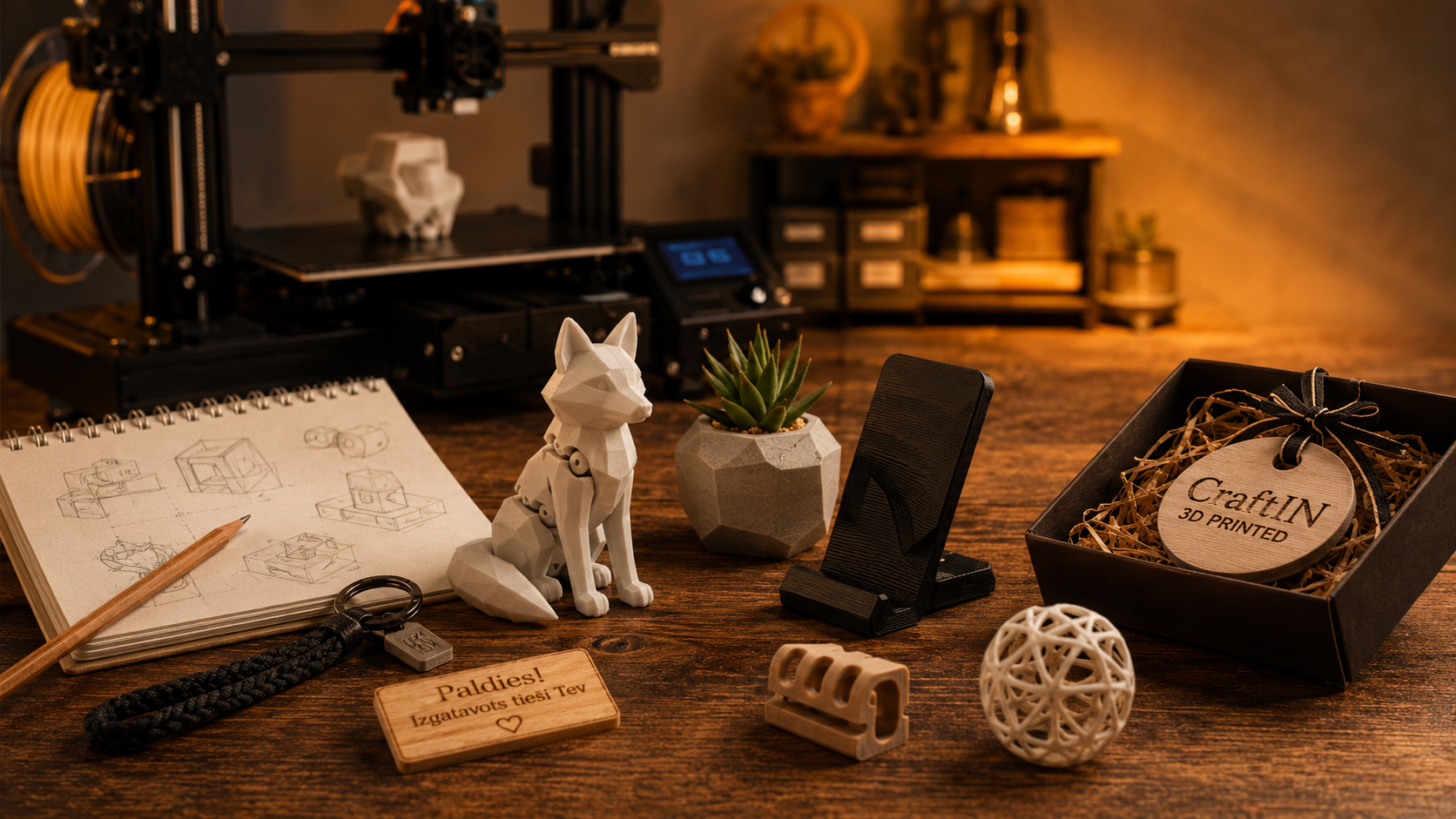 3D drukas pasūtījumi CraftIN darbnīcā – kad tā ir laba izvēle?Lasīt rakstu
<p> 3D druka ir viens no tiem rīkiem, kas ļoti labi iederas nelielā radošā darbnīcā. Tā ļauj izgatavot...
-
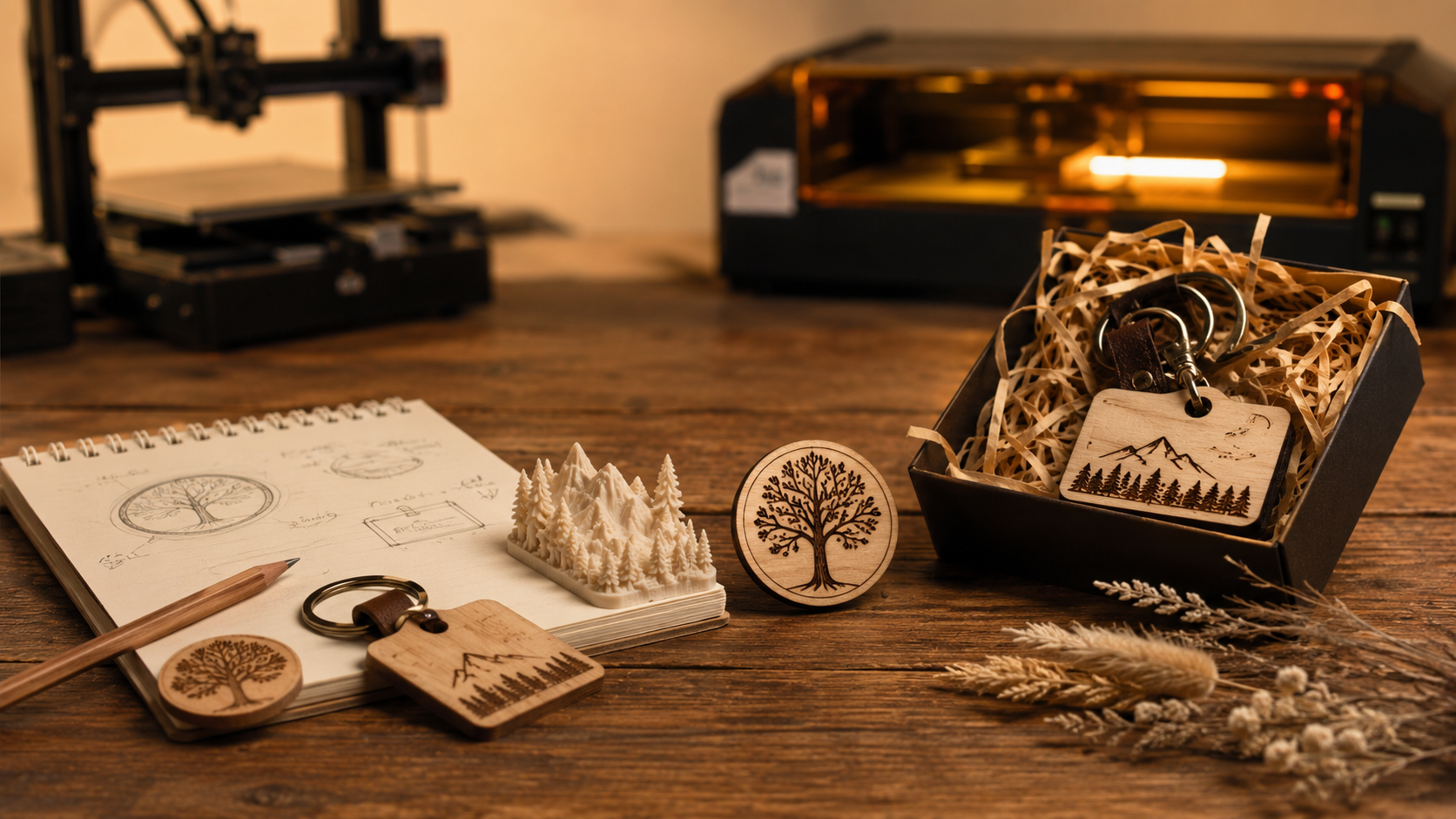 How does an individual order take place in the CraftIN workshop?Lasīt rakstu
Not always a gift or a practical thing begins with a finished product on the store shelf. Sometimes it all starts...
-
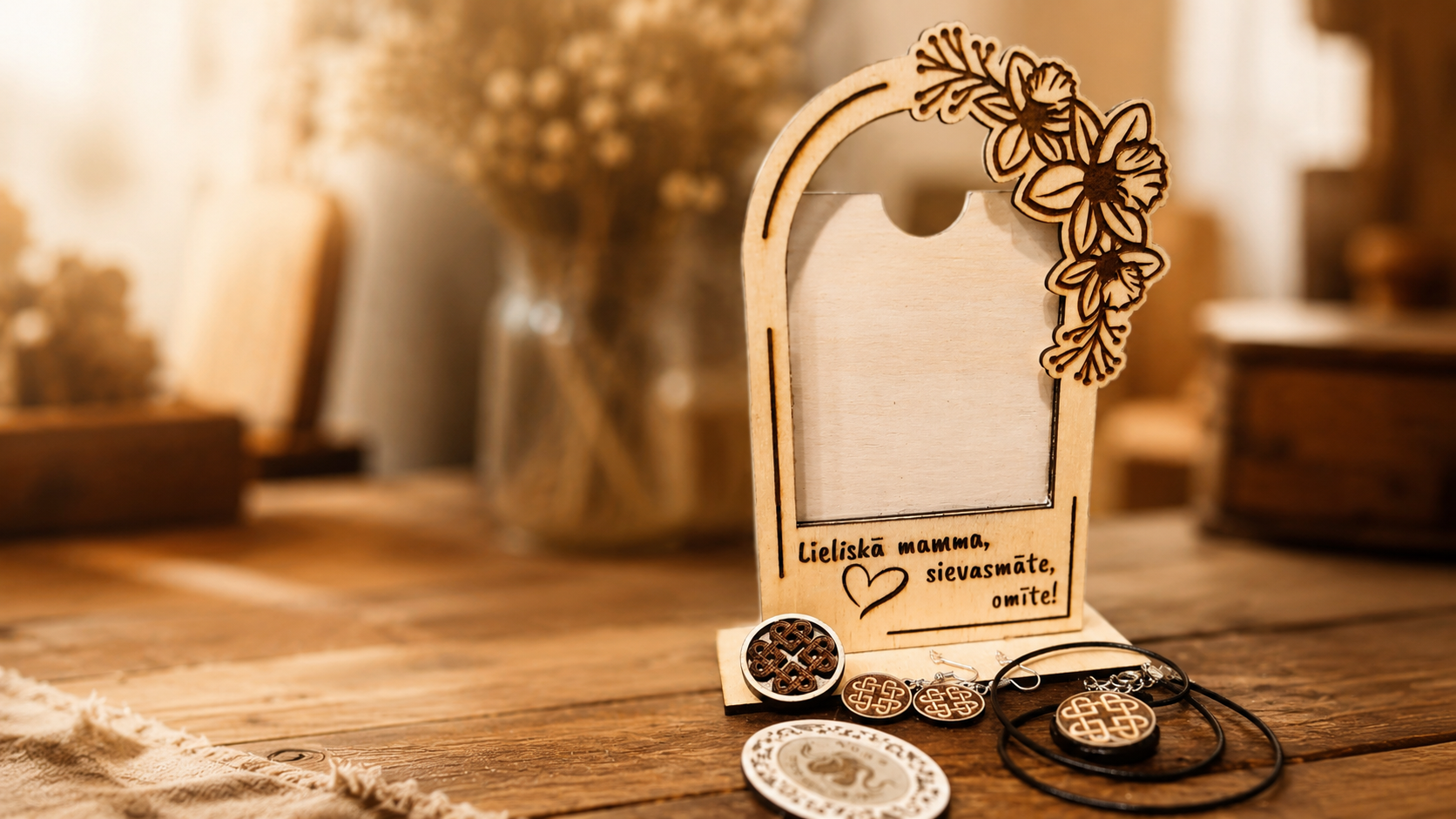 Personalized Birthday Gifts | CraftINLasīt rakstu
A birthday present does not always mean something big, expensive or complicated. Sometimes it’s a small, personal...
-
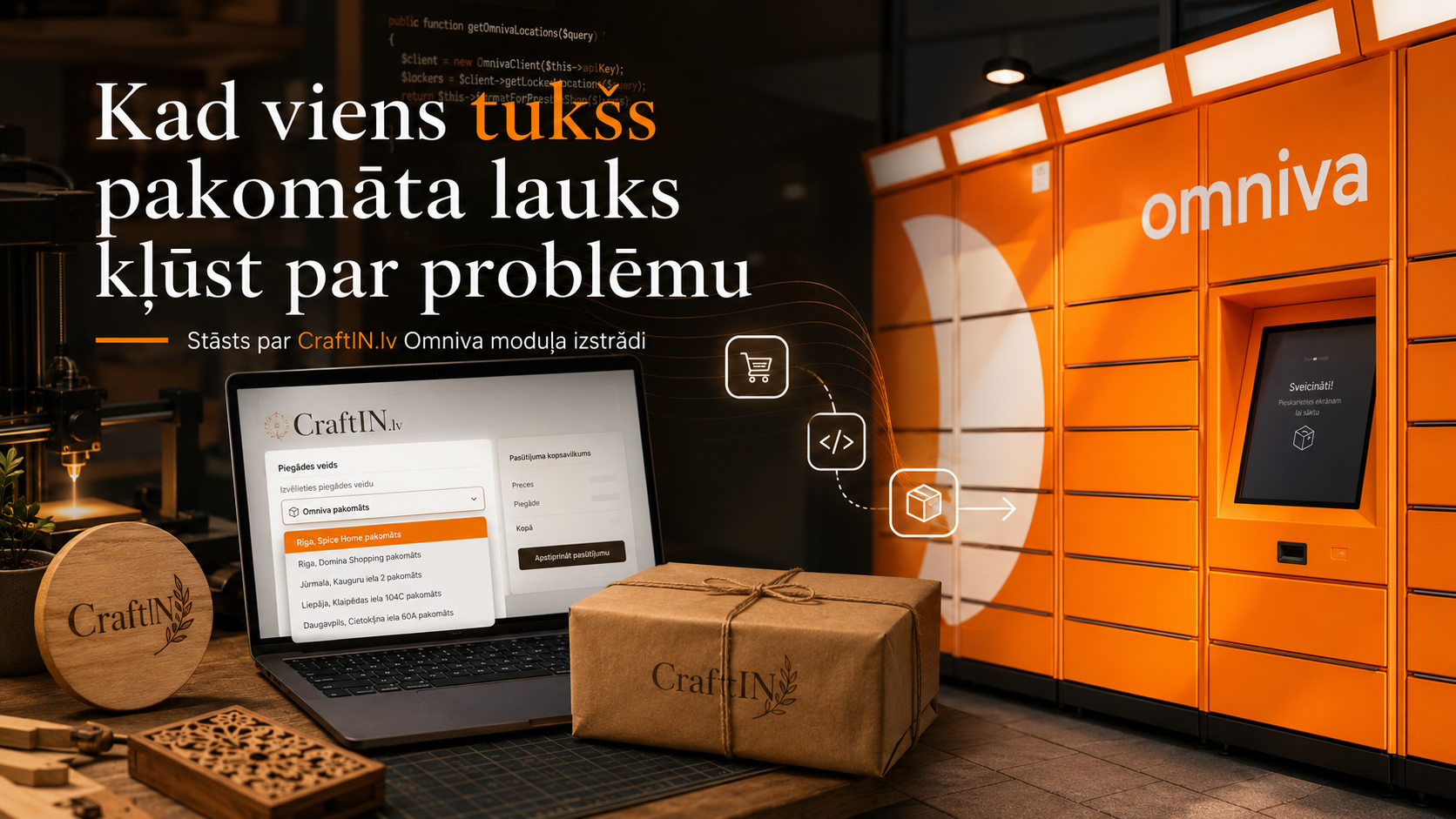 CraftIN Store Mysteries Solutions:"The Omniva input field that made you frown..."Lasīt rakstu
There are such moments in the life of an online store when everything supposedly works. The customer finds the...
-
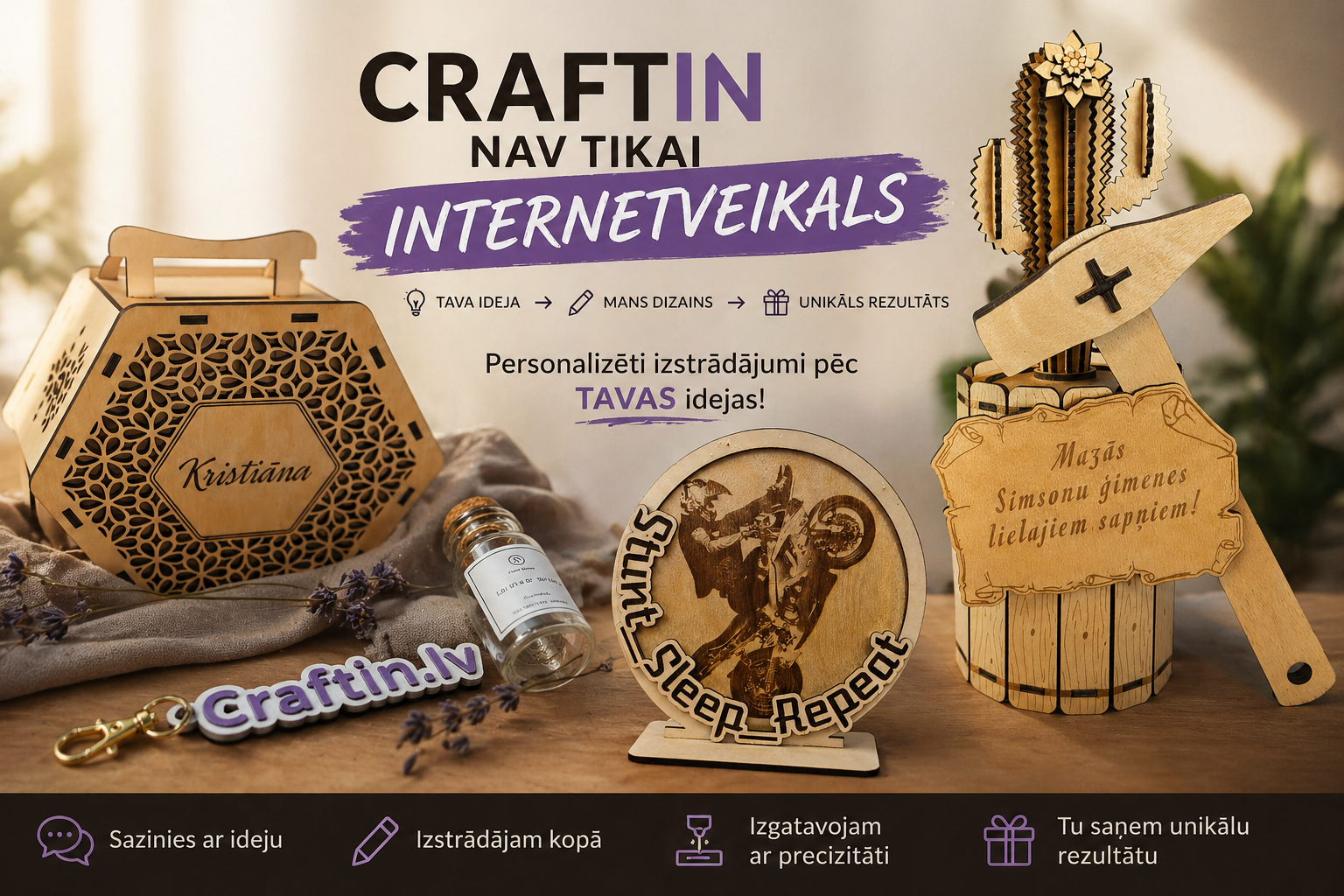 CraftIN is not just an online store – personalized gifts and individual ordersLasīt rakstu
If you have looked at the CraftIN online store, then you have already seen some of what I do. But only a part. In...
-
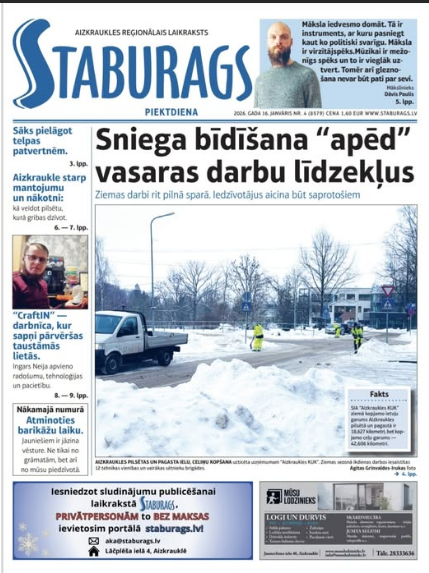 Interview in the newspaper "Staburags": "CraftIN" – a workshop where dreams turn into tangible thingsLasīt rakstu
When a hobby becomes a daily routine, and everyday life becomes a continuous learning, "CraftIN" arises. This is not...
-
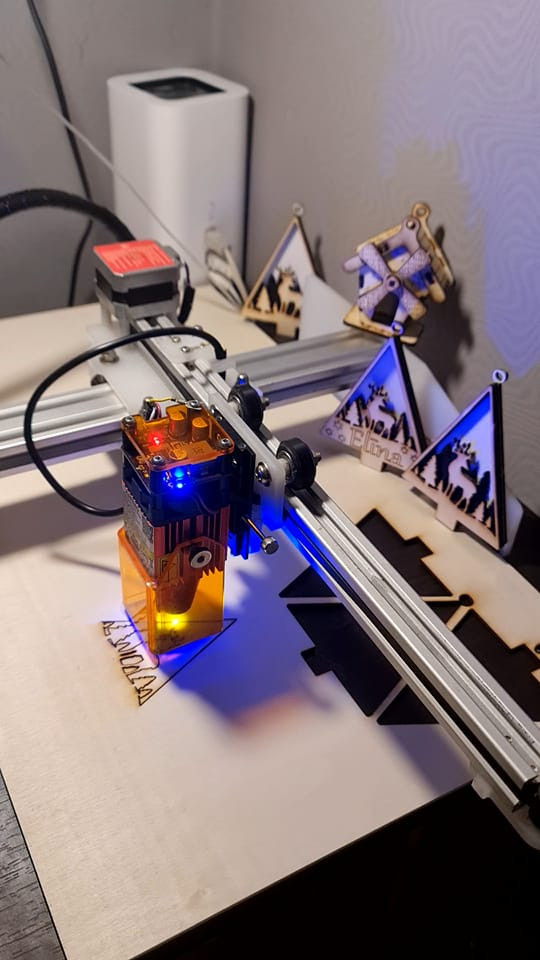 What is Laser Engraving, Laser Marking and Laser Cutting?Lasīt rakstu
"Laser engraving? It’s simple – press a button and everything happens by itself."But Is it really so? It’s not quite...
Blog categories
Search in blog
Archived posts
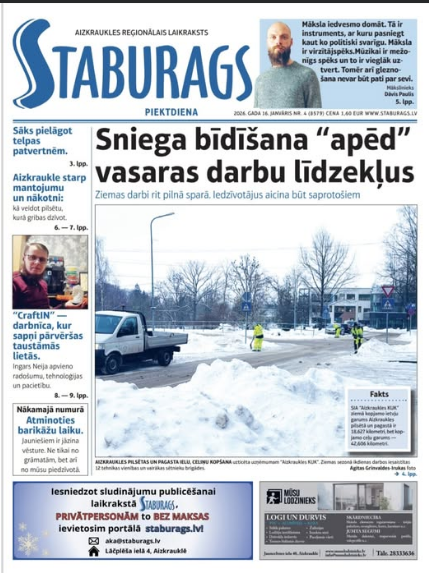
Interview in the newspaper "Staburags": "CraftIN" – a workshop where dreams turn into tangible things
Tell us a little bit about yourself. A lot has changed since the last time you were mentioned in a newspaper. What do you do?
Once again, I’ve changed my daily life quite drastically. Both the place of residence and the main job have changed, as well as many new knowledge and several hobbies have come along.
Describing myself, I would like to think that I am a versatile person. I’m interested in a variety of topics that I follow as much as I can, from technology and innovation to public opinion on a variety of issues, psychology and politics. It could be said that I am constantly learning , both adding to existing knowledge and trying to learn new skills that can be useful in both professional and personal life.
People who know me personally often wonder how I have enough strength and energy to realize my ideas. I can answer this quite simply: it is not enough, because there are still so many ideas and ideas. I am one of those people who categorically deny the principle of "everything is bad" and the constant complaining that often prevails on social networks. We must each remember that only we ourselves create the world around us, and our responsibility lies in what environment we live in. While others devote their energy to thinking about life, I choose to learn, do, and move forward.
Perhaps my activities are also reinforced by a certain workaholism — I believe that work is a holiday and that a job well done is one of the best rewards. In our family, Friday evenings are not perceived as a symbolic "disconnection" from work, but as an opportunity to meaningfully spend time together, strengthening the bond with each other. I believe that every person has some skills that are worth developing for the benefit of both themselves and society, and it would be a pity not to use them.
At the moment, most of my daily life is occupied by my main job, however, I consciously try to balance it with time for family and my hobbies. Laser engraving and 3D printing are currently two major passions that require not only significant resources and knowledge, but also a lot of time, patience and attention. Both of these activities are based on continuous experimentation – tests, calibration and also errors, without which it is impossible to achieve the best result. One has to learn from theory and technical specifications, from the experience of others, and from one’s own mistakes.
I know I operated under the name "CraftIN". How did you come up with this title?
I have to say that "CraftIN" arose quite organically, and even suddenly, in a way—at a time when a name was needed to identify my activities on social media in a simple and understandable way. There was no goal in creating a brand with a complex concept, rather a name that reflected the very essence.
The word "craft" in translation from English means to create, make or create with hands and mind, while "IN" are the initials of my first and last name, which at the same time also form an independent English word with the meaning "in" or "within". By combining the two, "CraftIN" carries within itself the idea of creating from within—the transformation of ideas into tangible objects, the process by which a person works with himself and creates something for others from himself.
In Latvian, this name could be interpreted as "created from within" or "creation in me", which very accurately describes both my approach to work and the project itself. "CraftIN" isn’t just a name for specific products—it’s the framework for all of my creative and technical activities, which combine laser engraving, 3D printing, design, and continuous experimentation. In short, "CraftIN" is what I can offer people to create in their workshop.
Over time, "CraftIN" has become a platform where I can combine my technical knowledge, creative ideas and desire to constantly learn, as well as supplement it in the future with a new offer as needed. It’s a process, not an end result — every project and every customer’s order is an opportunity for me to take the next step towards new, more special and more personal solutions.
I try to offer and reflect the basic idea that my goal is not to create a pile of the same serial products, but to focus on things personalized to the customer in one or a few copies. I think the public is tired of the wide-ranging items available on store shelves—everyone wants something special, something that’s created just for them. Something that carries with it a special energy and aura.
I think it’s not the art of walking into a store and buying some impersonal thing to give to someone, but coming up with an idea, finding someone who’s going to realize it, and getting to the final product — that’s something special.
Are you an "ensemble" person? Do everything yourself, including maintaining a website, processing orders?
If you look at this issue as a whole, yes, for the most part I do everything myself. Both the creation and maintenance of the website, as well as the acceptance, production, post-processing and shipping of orders are on my shoulders. In addition, I am self-employed, so I also do the accounting myself. At the same time, my family has very significant support — without their involvement and understanding, none of this would be possible. It is the family who are the first testers, critics and evaluators of all products, for which I say a big thank you to them from the bottom of my heart.
Sometimes both children and wife help to prepare larger orders, pack parcels, deliver them for shipment or bring the necessary raw materials from the store on the way. Sometimes they are also involved in the production process itself or post-processing. However, this is always on my own initiative, not as an obligation – basically, CraftIN is still based on my work and responsibility.
Combining all processes is a systematic and very time-consuming job, so on a daily basis I focus on the timely execution of orders and high-quality delivery to customers. In the background at the moment there are social networks and an online store, where I add new goods as much as possible. Although the online store is functional and accessible to customers, improvements and further development are planned for it in the near future.
Activity on social networks is currently not as regular as one would like, because creating content in parallel with production often interferes with the work process. In addition, a large number of orders are personalized, and customers often ask not to make them public on social networks, which I always respect.
I believe that it would not be right to impose my hobbies on others, but if someone shows genuine interest and desire to get involved or learn something new, I am always happy to be interested and helped. At the moment, the volume of orders is not yet so large and regular as to cause insurmountable difficulties, however, in the future, if an investor or cooperation partner shows interest, this idea could certainly be developed more widely and also create new jobs.
Laser engraving and 3D printing are not understandable to everyone. Tell readers how the process really works, what materials are used.
I’ll start with laser engraving, because it was the first technology I started working with myself. Basically, it’s a relatively simple process — laser engraving is the physical effect of a concentrated beam of light on a material. Regardless of what laser and what material is used, there are a huge number of interrelated variables in this process that must be taken into account in order for the engraving or cut to come out exactly as intended. I work with diode-type lasers on a daily basis, so I will talk specifically about this technology, although there are other types of lasers – CO₂ lasers and fiber lasers, which are used for more specific cutting and engraving work. In the case of laser engraving of the diode, the process is based on the action of a strongly focused light beam on the material. When engraving, the top layer of the material is affected, while in the case of laser cutting, the beam passes through the entire thickness of the material.
The whole process begins with an idea, followed by the planning of the drawing, measurements and the creation of a digital design. This requires specialized computer software, in which a drawing is developed and then sent to the laser equipment in understandable code. I use licensed, paid software that allows me to both create a design and control the laser itself — set different layers, adjust power, speed, and also customize images for engraving if necessary. The process does not end there. In order for the engraving to succeed in quality, it is necessary to correctly select and prepare the material on which it will be made. Testing and calibration required — depending on the material, the laser movement speed, beam power, focal length, and also additional air supply need to be adjusted. These parameters directly affect the final result: if the power is too high and the speed too low, the engraving will be too deep, if the power is too small and the speed too high — the engraving may be too bright or blurry. An additional air supply helps to blow away smoke and fine ash, ensuring a clean and uniform effect of the beam on the material. Engraving or cutting is followed by post-treatment – cleaning, sanding, finishing or treating the surface with protective equipment. This stage is often as important as the engraving process itself, since it is this that determines the visual and tactile quality of the product.
3D printing is a completely different, but no less exciting technology. It is based on the formation of objects layer by layer from a digital model. Here, too, it all starts on a computer — a three-dimensional model is created or adjusted, which is then digitally divided into very thin horizontal layers or layers with the help of a special program. This information is sent to the 3D printer.
On a daily basis, I work with the so-called FDM type 3D printing, where plastic thread or filament is used as a raw material. The printer heats this material to the melting point and, guided exactly by the digital model, applies it layer by layer until a finished object is formed. Depending on the application, different materials are used – for example, PLA, PETG or other types of plastic, which differ in strength, elasticity and visual properties. The most popular material is PLA, which is a bioplastic based on plant starch. It is easier to process, prints at relatively lower temperatures and is suitable for both decorative and practical products. PLA material is safe, without pronounced odor during printing, and is available in a very wide range of colors and textures.
As with laser engraving, settings – print speed, layer thickness, temperature, filling density and cooling – play a key role in 3D printing. Both the strength and appearance of the part depend on these parameters. Here, too, one cannot do without testing, mistakes and repeated attempts. Printing is often followed by post-processing – cleaning, grinding or assembling parts.
Both laser engraving and 3D printing require patience, precision, and constant learning, but that’s what makes these processes so interesting— an idea that starts in your head or on a computer turns step by step into a real, tangible thing.
When I started to engage in laser engraving, I studied a lot of foreign resources, obtaining information, and realized that there is not much such information in Latvian. That’s why I also created a Facebook group called "Laser Engraving/3D Printing Commune", which brings together enthusiasts and professionals from these fields to share their experience and look for solutions to various problems, as well as people who want to find a master to realize their idea — a simple but special gift or a larger project. In this community, we try to exclude competition from each other, because one thing is clear: customer preferences are different, and those that cannot be realized using my technique may be realized by someone else with more suitable tools.
Where did you get product ideas?
For the ideas, the greatest thanks should be said to customers. They seem to understand the concept of "CraftIN" very well—a focus on individuality and unique solutions. Most projects start quite simply with a message in which the client sends an inspiration image found on the Internet, a hand-drawn sketch or a simple description of the idea and the question: "Hello! Can you make me one like that?"
If I see that it is possible to realize an idea, the process can begin. We discuss all the details, desires and technical possibilities together until we come to a common denominator after which I can proceed to creation. In the course of work, I regularly send a photo or video of the process to the client, coordinating the most important steps so that the final result is as accurate as possible and corresponds to the plan.
Of course, there are also ideas that come up for myself — I try to implement them in moments when I can afford to experiment. I often offer the realized ideas already as ready-made products in small copies. I will not hide the fact that in some cases I also use purchased drawings or license rights for the use of specific designs, if they exactly meet my needs. It is not always necessary to reinvent a bicycle – a ready-made drawing can serve as a solid foundation on which to further build an improved and customized new product solution.
At what point did the hobby grow into business? We hear a lot that nowadays it’s madness to try to develop something on your own. What does your experience show?
At the moment, I do not yet define my occupation as a full-fledged business, although from a legal point of view it is, of course, an economic activity and is registered. Rather, I see it as a hobby that is able to cover my expenses and sometimes also brings a small profit, which I immediately invest back in development. It’s also a great way to show children that when we do, we’re dreaming and fulfilling dreams.
In my case, what I do brings joy, brings new knowledge, skills and satisfaction – it’s not just the obligation to produce and sell. Of course, it would be great if these hobbies grew over time to a level where they could also fully provide for the family’s livelihood, but even if that doesn’t happen, I still consider myself a winner.
We often hear a lot of negative opinions and warnings about how difficult it is to start something of your own, but often they are based on fear and ignorance, rather than real experience. It is quite normal to be afraid of the unknown and feel uncomfortable stepping out of the comfort zone, however, only we ourselves can build our daily life and the environment around us. My experience shows that the most important thing is to do — to study, to learn from the experiences and mistakes of others, but the main thing is to take the first step. No one else will do that for us.
If you want to see a person who will change your life for the better, look in the mirror!
It sounds like you’re not joking—where did you draw your strength?
The greatest source of energy and strength is definitely the family. It is they who are my pillar, support and main motivation in everyday life. I’m also charged by the process of creation itself—the opportunity to invent, create, inspire, and be useful to someone. I have the opportunity to create a wide variety of everyday things, toys, décor, keychains and much more that I can please my family and loved ones with. The opportunity to bring joy to others certainly increases my strength as well.
Customer reviews and feedback are also very gratifying. Even a short comment that a customer writes, devoting only a couple of minutes of his time to it, means a lot to a homemaker or a small entrepreneur. It is a motivation to continue and a confirmation that what has been done is necessary.
That’s why I always encourage people not to be afraid to share their opinions and leave feedback – it’s a simple but very valuable way to support locals. For me personally, such an assessment gives extra energy and helps to continue even in moments when it seems that there is more work than strength.
Do you plan to bring yourself into the sun more broadly as well? There are projects available for business development, entrepreneurs’ days where to show themselves. Is any of this in your plans?
I’ll definitely consider such options at some point in the future — there’s no doubt about that. However, at the moment I am more focused on improving my skills and techniques, as well as time management, because my main job is very dynamic and sometimes affects hobby plans.
My experience so far shows that the most effective advertising is the customers themselves – if the work is of high quality and the attitude is fair, people are happy to share their experience and recommend good service providers to others. This is much more effective than artificial advertising.
In turn, various development projects, events and public self-presentation can serve as a good additional breakthrough at the moment when it will be in line with my capabilities and long-term plans. Depending on how I do in the future, the need for external impetus or a breakthrough may come very soon — because one has to look in the direction of both improving the workshop and acquiring new tools needed for future projects and opportunities.
In any case, I am open to collaboration, in addition, the chunky number of followers on my social networks can help someone develop and grow with me.
What would be your three golden recommendations for those who want to turn their hobby into a real business?
Most people who strive for self-growth and self-improvement have some unfulfilled dreams or skills that are still waiting for their moment of development. For me, laser engraving was also a dream from childhood, when I was engaged in drawing and pyrography. Today, it is possible to realize this dream using modern technologies – it has naturally evolved to laser engraving, and 3D printing has also come with it quite organically.
My first suggestion is to start with what really excites you. Not with what is "in fashion" at the moment, but with what is of interest to you specifically. Even small steps towards your dream are already progress and give motivation to continue. If you don’t even try, you’ve already lost — you can only gain by trying.
The second is to learn and not be afraid to make mistakes. Knowledge, experience and mistakes are an inevitable part of the process. The more you learn and experiment, the more confident you feel in your field and the more qualitative the final result becomes.
Third, be patient and allow the process to develop. Not everything immediately turns into a business, and it doesn’t have to be that way. Sometimes a hobby first becomes a stable skill, then a sought-after service, and only then a business.
I believe that Latvians are by nature a very skilled, hardworking and talented people. Each of us has the opportunity to awaken the child’s optimism in ourselves and find time to develop our hobbies, talents and skills. Who knows—that’s probably how the next successful story comes about. And don’t be shy—don’t put a candle under the dowry, show, tell stories, and share what you mean. Discover yourself to the world, gather like-minded people around you and inspire others. Perhaps one day you will also give a similar interview in a newspaper.
Posted in:
Citi raksti
Related posts
-
CraftIN is not just an online store – personalized gifts and individual orders
If you have looked at the CraftIN online store, then you have already seen some of what I do. But only a part. In...Lasīt rakstu
-
CraftIN Store Mysteries Solutions:"The Omniva input field that made you frown..."
There are such moments in the life of an online store when everything supposedly works. The customer finds the...Lasīt rakstu
-
Personalized Birthday Gifts | CraftIN
A birthday present does not always mean something big, expensive or complicated. Sometimes it’s a small, personal...Lasīt rakstu
-
How does an individual order take place in the CraftIN workshop?
Not always a gift or a practical thing begins with a finished product on the store shelf. Sometimes it all starts...Lasīt rakstu
-
3D drukas pasūtījumi CraftIN darbnīcā – kad tā ir laba izvēle?
<p> 3D druka ir viens no tiem rīkiem, kas ļoti labi iederas nelielā radošā darbnīcā. Tā ļauj izgatavot...Lasīt rakstu
Leave a comment